

The Masks of India: 10 Ancient Ritual Dance Traditions

Indian sacred masks ritual dance traditions represent an unbroken lineage of performance where human actors transform into living deities during seasonal festivals. Across every corner of the subcontinent, these ceremonial arts reject modern minimalism to celebrate cosmic balance, divine fury, and village protection through exuberant visual splendor.
Direct Answer: Indian sacred masks in traditional performance arts are ceremonial objects crafted from wood, bamboo, palm sheaths, and clay. Used in traditions like Gavari, Padayani, and Mukha Bhaona, these sacred faces allow consecrated performers to embody ancestral spirits, Hindu deities, and celestial guardians during community rituals.
Why Indian Ritual Masks Reject Minimalism

In contemporary design discussions, minimalism often dominates aesthetic philosophy. Traditional Indian ritual performance takes the opposite stance with absolute conviction. Sacred art across the subcontinent is maximalist, visceral, and unapologetically ornate. When a rural community prepares for an annual festival, every visual adornment must reflect the cosmic grandeur of the deities. The Natyashastra defines this dimension as Aharya Abhinaya, the expression communicated through costumes, physical ornamentation, and masks.
A sacred mask in an Indian village is never a theatrical prop or decorative disguise. In European carnivals, masks conceal individual identity for social satire. In traditional Indian performance, the mask accomplishes the reverse. It erases mortal ego so a transcendent archetype manifests in physical space. Performers undergo rigorous fasting, celibacy, and temple prayers before wearing the mask, converting the mortal body into a consecrated vessel.
1. Gavari Mask Dance of Rajasthan: The 40-Day Bhil Devotion

The Mewar region of Rajasthan comes alive each autumn with Gavari, a 40-day ritual dance-drama preserved by the Bhil community. Beginning after Raksha Bandhan, troupe members observe strict austerities: sleeping on bare ground and eating one meal daily without green vegetables. Dedicated to Goddess Gauri, the ritual centers on Budhiya, an incarnation of Shiva wearing a square carved wooden mask. Budhiya dances counter-clockwise against the chorus, symbolizing cosmic balance. Explore our analysis of Astras: Reconstructing the Divine Weapons of Ancient India for context on martial deities. Gavari unites scattered villages through shared devotion.
2. Padayani Kolams of Kerala: Soothing the Divine Rage of Bhadrakali

In Central Travancore, Kerala, the sacred art of Padayani unfolds to the thrum of the Thappu drum. Enacted at Bhadrakali temples in Pathanamthitta and Kottayam, this ritual pacifies Bhadrakali after she slays demon Darika. To soothe her cosmic rage, Lord Shiva's attendants danced wearing colossal, grotesque masks called Kolams. Artisans paint these masks on fresh areca palm sheaths using natural pigments like charcoal, turmeric, and slaked lime. Multi-tiered Bhairavi Kolams transform destructive fury into harmonious community prayer.
3. Ramman Theatre of Uttarakhand: Himalayan Village Gods and UNESCO Heritage
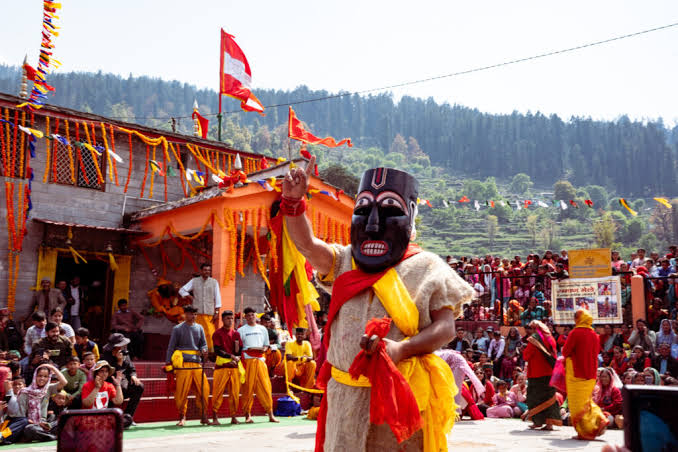
In Uttarakhand's Garhwal Himalayas, Saloor and Dungra villages celebrate Ramman every April. Inscribed on the UNESCO Intangible Cultural Heritage list in 2009, this sacred masked theatre is performed at the Bhumiyal Devta temple to protect the valley. Hereditary clans wear sacred wooden masks called Mukhota. Purified dancers wear Dhyatt masks portraying deities like Rama and Narasimha, while Kholiya masks depict comic figures like pastoralists and traders, accompanied by bronze cymbals and copper drums.
4. Gomira Masked Dance of West Bengal: Rural Rajbanshi Woodcraft and Chandi Puja

Across North and South Dinajpur in West Bengal, the Rajbanshi community celebrates Gomira between April and July. Honoring Gram Chandi, this ritual dance invokes agricultural prosperity and wards off seasonal malevolence. Gomira masks are carved by Kushmandi artisans using light softwoods like Gamhar and Neem. Depicting deities like Chamunda, Narasimha, and ancestral spirits, the masks are preserved in village shrines. Guided by the thunderous Dhak drum, masked dancers move in silent mime, entering an ecstatic trance.
5. Raula-Raulane of Himachal Pradesh: Kinnauri Spirit Protectors in Deep Winter

In snowbound Kinnaur, Himachal Pradesh, freezing winter brings Raula-Raulane, a five to seven day festival. Villagers celebrate this tradition to pacify the Saunis, mountain spirits believed to wander near settlements during blizzards. Two chosen male dancers embody a sacred bride called Raulane and groom named Raula. Adorned in handwoven Pattu shawls, silver jewelry headpieces, and the floral Thepang cap, their ceremonial dance enacts a cosmic marriage that brings warmth and fertility to mountain hamlets.
6. Mukha Bhaona of Majuli Assam: Sacred Vaishnavite Bamboo and Clay Sculptures

Founded in the 15th century by saint Srimanta Sankardev, Mukha Bhaona is the traditional masked theatre of Assam's Majuli Island. Centered at Natun Samaguri Satra, artisans craft intricate masks using split bamboo frameworks wrapped in cotton cloth, coated with river silt and cow dung, and colored with earth pigments. Colossal Cho Mukha structures feature movable jaws depicting Ravana, Kumbhakarna, and Garuda. Read our investigation on Why Bollywood Is Terrified to Adapt The Mahabharata to understand the challenges of staging ancient Indian epics.
7. Bardo Cham of Arunachal Pradesh: Buddhist Animals and the Judgment of Karma

In the high monasteries of West Kameng and Tawang in Arunachal Pradesh, the Sherdukpen and Monpa communities perform Bardo Cham. Rooted in the Bardo Todol, or Tibetan Book of the Dead, this sacred dance depicts the intermediate state of consciousness between death and rebirth. Monks wear carved wooden animal masks representing twelve symbolic creatures appearing before Shinje, the Lord of Death. Accompanied by Dungchen horns, Bardo Cham teaches that overcoming fear requires cultivating compassion and spiritual clarity.
8. Somana Kunitha of Karnataka: Ferocious Village Guardians and Mother Goddess Cults
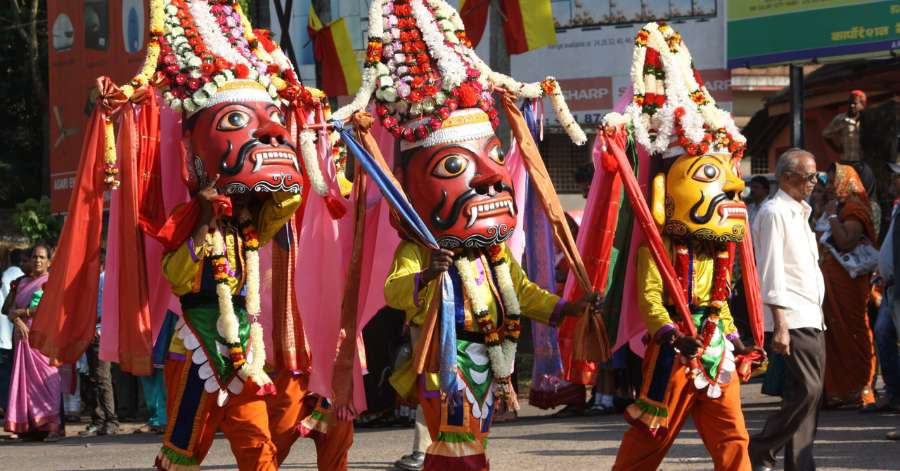
Across southern Karnataka, the Gangemata community performs Somana Kunitha during pre-monsoon village festivals. Dedicated to Grama Devathe mother goddesses, the dance features two consecrated wooden masks: Kempu Soma, a fierce red face channeling Durga's wrath; and Bili Soma, a serene yellow face radiating peace. Performers balance a massive twenty-kilogram circular crown called Simhasana, lavishly adorned with yellow marigolds and silk sarees. Check out our exploration of Shiva's Third Eye: Pineal Gland Science in Sci-Fi Films to understand how trance states connect with ancient spiritual perception.
9. Prahlada Nataka of Odisha: The Consecrated Roar of Lord Narasimha

In southern Odisha's Ganjam district, Prahlada Nataka enacts Lord Narasimha slaying tyrant Hiranyakashipu. The performance treats the wooden Narasimha mask not as a prop, but as a living temple deity worshipped year-round with sacred mantras. When the purified actor dons the consecrated mask for the climax, he enters a ferocious spiritual trance. Assistants must restrain him with ropes around his waist, pouring cooling milk and coconut water over his body to temper the overwhelming divine energy.
10. Mokhada Bohada of Maharashtra: Nocturnal Tribal Procession of Fifty-Two Deities

In the forested hills of Palghar and Nashik in Maharashtra, the Warli and Kokna tribes celebrate Bohada during the month of Chaitra. Spanning three to seven nights, this nocturnal celebration transforms village streets into a mythological corridor. Bohada features fifty-two hand-carved wooden masks representing tribal spirits, Puranic figures, and ferocious deities, including Kalbhairav and Ravana with ten heads. Dancers move to the hypnotic Tarpa wind pipe and Sambal drum, visiting homes to bestow seasonal health.
The Indian Lens: Sacred Vessel Transformation vs Western Concealment
Understanding traditional Indian masks requires dismantling Western assumptions regarding theatrical costume. In Eurocentric performance history, masks frequently functioned as psychological armor, concealing personal vulnerabilities or facilitating courtly carnivals where social hierarchies were satirized. Greek persona and Venetian masquerades prioritized human disguise.
In direct contrast, Indian cultural philosophy approaches the ritual mask as a sanctified altar. Rooted in the Natyashastra and indigenous animism, individual mortal identity is considered transient. When a dancer assumes the mask of Kempu Soma or Budhiya, the performer does not stage an imitation. The community witnesses the voluntary dissolution of ego so a divine power walks among humans. The preparatory disciplines, including multi-week fasts and temple consecration, confirm that these masks are living religious instruments designed to harmonize human life with cosmic order.
Global Diaspora Recognition and the Living Preservation of Tribal Arts
In recent years, major cultural institutions across North America and Europe have started celebrating the profound complexity of India's indigenous mask arts. Exhibitions at London's Victoria and Albert Museum and the Smithsonian Institution in Washington D.C. have showcased the remarkable craftsmanship of Majuli's bamboo sculptors and Bengal's woodcarvers. For global diaspora communities, these living traditions provide a vital bridge to ancestral roots that transcend commercial cinema.
Safeguarding these arts requires addressing modern economic pressures. Urban migration and mass manufacturing challenge hereditary artisan families. Fortunately, grassroots artisan cooperatives, regional festivals, and cultural documentation initiatives across India are creating sustainable models for community-based preservation. By securing fair wages for master carvers and maintaining sacred performance spaces, these traditions continue to thrive.
The enduring power of Indian sacred masks reminds us that mythology is not an ancient relic preserved in glass cases. It remains an active, energetic encounter where mortal dancers, ancestral spirits, and cosmic deities share the village stage.
FAQ Section
What is the oldest traditional mask dance in India?
Ritual masked dancing in India traces back to prehistoric cave paintings found at Bhimbetka, dating back more than 10,000 years. Living traditions like Rajasthan's Gavari and Kerala's Padayani represent multi-century lineages rooted in ancient agrarian animism.
What materials are traditionally used to make Indian ritual masks?
Indian artisans craft ritual masks using local organic materials including softwoods like Gamhar and Neem, split bamboo, cow dung, clay, and areca nut palm sheaths. Pigments are naturally derived from turmeric, indigo, limestone, and wood charcoal.
Is an Indian ritual mask considered a religious idol?
In many folk traditions, including Odisha's Prahlada Nataka and West Bengal's Gomira, masks are treated as living consecrated deities. They are stored on sanctified temple altars throughout the year and receive daily prayers and incense.
Why do performers undergo strict fasting before wearing ritual masks?
Performers undergo intense austerities, including celibacy and dietary restrictions, to purify their mortal body before channeling divine energy. This spiritual discipline prepares the dancer to safely absorb the powerful persona of the deity.
Where can one witness authentic Mukha Bhaona performances in India?
Authentic Mukha Bhaona performances can be witnessed on Majuli Island in Assam, particularly at monastic centers like Natun Samaguri Satra during annual Raas Mahotsav festivals. Troupe members also present devotional performances in community prayer halls across Assam.


Comments